Weed Identification
Our technicians are trained in weed identification and have a combined 55 years of experience. They can accurately identify problem weeds and recommend the most effective treatment to keep your lawn healthy and looking its best.
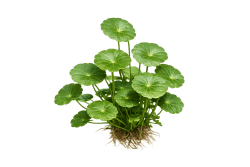
Dollar weed is a fast-growing weed that likes wet, overwatered lawns. Its round, coin-shaped leaves can quickly spread through healthy grass, making the lawn look uneven and depriving it of water, sunlight, and nutrients.
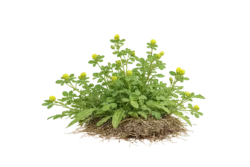
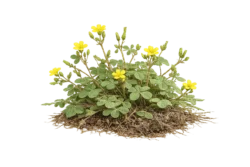
Black medic is a low-growing weed that can quickly spread through lawns, landscape beds, and bare spots. It has clover-like leaves and small yellow flowers and grows well in hard, poor-quality soil. Black medic can form thick patches that make an otherwise healthy lawn look less attractive.
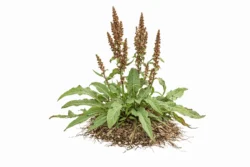
Curly dock is a persistent broadleaf weed known for its long, wavy-edged leaves and deep taproot system. It commonly occurs in lawns and disturbed soil. It competes with grass for water, nutrients, and sunlight. If left untreated, curly dock can spread through seed production.
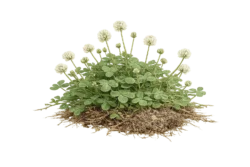
White Clover is a low-growing perennial broadleaf weed commonly found in lawns, pastures, and landscapes. It spreads by creeping stems (stolons) that root at nodes, forming dense patches.
Woodsorrel is a low-growing weed commonly found in lawns, landscape beds, and gardens. It is easy to spot by its clover-like leaves, made up of three heart-shaped leaflets, and its small yellow flowers. Woodsorrel can spread quickly and make lawns and planting areas look less tidy.
Grass Weed Identification
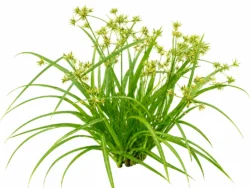
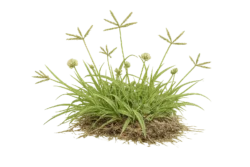
Sedge is one of the most stubborn and fast-growing weeds found in lawns. Often mistaken for grass, sedge grows faster than the surrounding turf. It thrives in moist, poorly drained soils and can quickly spread through underground tubers and rhizomes.
Crabgrass is an annual grassy weed that commonly invades lawns, landscapes, and bare soil areas. It spreads by seed and forms wide, low-growing clumps with coarse, light-green blades that radiate outward from a central point